

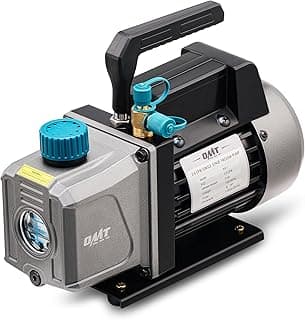
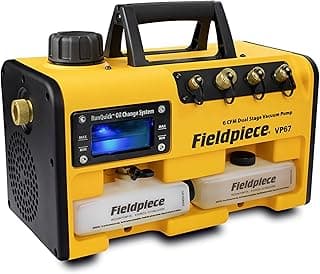
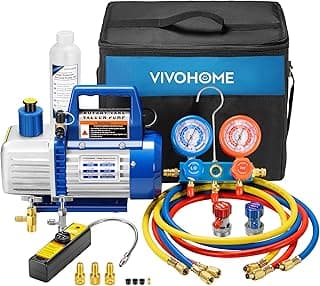
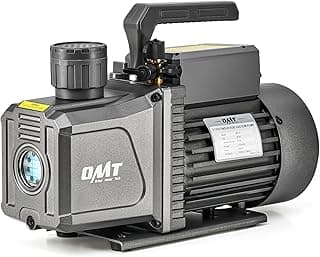
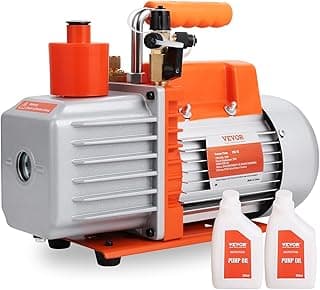
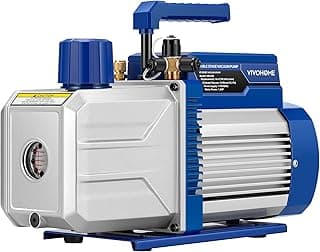
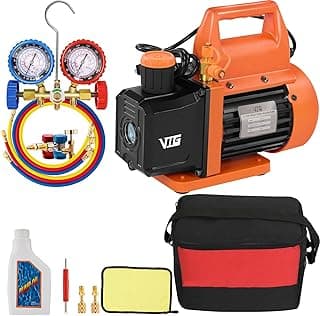
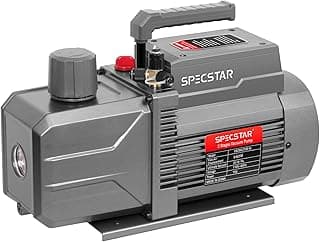
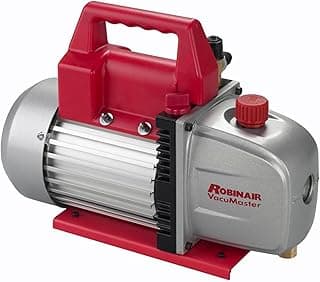
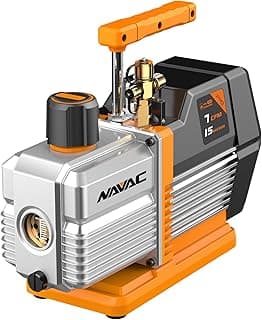
Why HVAC Vacuum Pumps Matter Beyond DIY Territory
Refrigeration systems require absolute moisture and air removal before charging. Any residual water vapor becomes ice crystals that damage compressors and expansion valves—failures costing hundreds in parts plus the credibility damage from repeat service calls. Air contamination prevents proper heat transfer and causes premature system degradation. Professional vacuum pumps achieve the deep evacuation levels (500 microns or below) that prevent these problems entirely.
Harbor Freight $60 pumps and "good enough for DIY" options don't reach these specifications reliably. They might pull visible vacuum on gauges, but can't achieve or maintain the micron levels professional work demands. New techs learning with inadequate equipment develop bad habits—shorter evacuation times, skipped verification steps, tolerance for "close enough" results that haunt their reputation as callbacks accumulate.
This quality threshold makes vacuum pumps particularly meaningful gifts for specific career moments. Someone graduating trade school needs professional equipment from day one to establish proper work habits. An apprentice moving from helper to lead tech requires tools enabling independent professional work. A seasoned tech starting their own business deserves flagship equipment reflecting their expertise level. Each context transforms practical tool into symbolic career investment.
Professional tools aren't expenses—they're partnerships. The right equipment enables career trajectories that inferior tools actively prevent.
Understanding the Target: Who Actually Needs This Equipment
HVAC apprentices and recent trade school graduates: Starting careers require complete tool sets often financed through debt or slow accumulation. Parents or family members gifting essential professional equipment provide immediate career enablement rather than waiting years for self-purchase. The vacuum pump becomes foundation tool enabling proper job execution from day one. For those exploring meaningful gifts for young men entering trades, professional equipment beats generic congratulatory gestures.
Automotive technicians specializing in AC work: Auto AC service generates significant shop revenue during summer months. Techs with personal best vacuum pump for auto AC equipment can take side jobs or mobile work—supplementing income substantially. For partners supporting entrepreneurial automotive careers or parents helping kids build technical businesses, proper equipment directly enables income generation impossible without it.
Property managers and landlords doing own maintenance: Multi-unit property owners facing frequent AC service calls face annual expenses easily exceeding $2,000 for professional evacuation and recharge services. Quality vacuum pump investment pays for itself within single season while enabling immediate response to tenant issues. For practical recipients managing investment properties, tools reducing operational expenses deserve consideration alongside other practical milestone gifts.
DIY enthusiasts with multiple AC systems: Homeowners maintaining personal systems plus helping friends and family justify professional-grade equipment through cumulative use. Someone installing mini-split systems in garage workshops, helping elderly parents with maintenance, or managing vacation property HVAC benefits from proper evacuation capability. The line between hobbyist and semi-professional blurs for these technically-capable individuals deserving appropriate equipment.
CFM and Micron Ratings: Specifications That Actually Matter
CFM (cubic feet per minute) measures pump displacement speed—how quickly it removes air and moisture from systems. Higher CFM means faster evacuation, critical for professional efficiency where time directly converts to earning capacity. A 3 CFM pump evacuates residential split systems in 15-20 minutes; a 10 CFM pump handles the same job in 6-8 minutes. For techs running four jobs daily, this time savings compounds to additional appointments and increased income.
Micron level indicates vacuum depth achievable—lower numbers mean better evacuation. Industry standard requires reaching and holding 500 microns for residential work, 200-300 microns for commercial applications. The best vacuum pump for HVAC reaches ultimate vacuum below 50 microns, providing margin ensuring reliable 500-micron achievement even with slight leaks or contamination. Pumps claiming micron ratings without gauge verification capability should trigger skepticism—verification matters more than manufacturer claims.
Single-stage versus two-stage designs represent fundamental engineering approaches. Single-stage pumps pull vacuum in one compression cycle—adequate for many applications and significantly cheaper. Two-stage pumps compress air twice, achieving deeper vacuum levels faster and more reliably. Professional HVAC work benefits enormously from two-stage capability; automotive AC work often succeeds with quality single-stage designs. Matching stage specification to actual use case prevents overpaying for unneeded capacity or underpaying for inadequate performance.
The Two-Stage Advantage for Professional Applications
Two-stage pumps remove moisture more effectively through deeper vacuum achievement. Water boils at lower temperatures under vacuum—at 500 microns, water boils around 35°F, ensuring moisture removal even in cooler conditions. Single-stage pumps struggle reaching these levels consistently, leaving residual moisture that compromises system longevity. For professional work where reputation depends on installation quality, two-stage reliability justifies premium pricing.
Contaminated oil recovery differs dramatically between designs. Single-stage pumps mix contaminated vapors with fresh oil, degrading lubricant quickly and requiring frequent changes. Two-stage designs separate stages, protecting secondary stage oil from contamination while first stage handles dirty work. This extends oil life significantly—critical for techs running multiple jobs daily without maintenance windows between appointments.
Noise levels vary between designs too. Two-stage pumps generally operate quieter through smoother compression cycles. For residential service where customer perception matters, quieter operation feels more professional. Mobile automotive work in apartment parking lots benefits similarly—less neighbor disturbance from extended evacuation procedures. These soft factors influence customer satisfaction ratings that determine referral business and review scores increasingly driving trade success.
Gas Ballast Feature: Essential for Moisture-Heavy Applications
Gas ballast valves admit small amounts of atmospheric air during compression, preventing water vapor condensation in pump oil. Without this feature, moisture-contaminated systems (common in neglected units or water-damaged equipment) destroy pump oil rapidly—requiring changes after every wet system. Gas ballast enables handling moisture-heavy evacuations without oil degradation, crucial for service work encountering diverse system conditions.
Automotive AC work particularly benefits from gas ballast given moisture exposure in compromised systems. Cars with failed compressor seals or systems open to atmosphere during repairs contain significant moisture. The best automotive AC vacuum pump handles these conditions without maintenance burden that makes working on problem vehicles economically unviable. For techs specializing in repair rather than just new installations, this feature becomes essential rather than optional.
Oil monitoring becomes critical with gas ballast systems. While the feature protects oil from moisture, it doesn't eliminate all contamination. Visual inspection for milky oil (indicating water contamination) or darkening (indicating particle contamination) should happen before each use. Techs who check oil religiously extend pump life significantly; those who ignore maintenance destroy equipment rapidly regardless of initial quality. For gift recipients, including oil maintenance guidance with pump purchase ensures longevity matching equipment quality.
Rotary Vane Technology: Why It Dominates Professional Use
Rotary vane pumps use spinning rotor with extending vanes creating compression chambers. This design achieves deep vacuum reliably while maintaining reasonable size and weight—critical for mobile service work. Alternative technologies (diaphragm, piston) struggle matching rotary vane performance in portable formats suitable for van-based technicians.
Vane material quality separates premium from budget pumps. Composite fiber vanes last thousands of hours under proper oil maintenance. Cheap phenolic vanes wear rapidly, losing sealing capability and vacuum depth. While vanes are replaceable, frequent replacement indicates poor initial material quality. Professional-grade pumps using quality vanes require replacement only every 500-1000 hours of operation—years for typical technician workloads.
Oil lubrication remains essential for rotary vane designs. Oil seals compression chambers and lubricates moving parts. Oil-free pumps exist but can't match rotary vane vacuum depth or longevity—suitable only for light-duty applications. For professional HVAC and automotive work, rotary vane remains standard precisely because long-term reliability and performance justify oil maintenance requirements. Recipients should understand this maintenance commitment rather than discovering oil management only after purchase.
Gauge Compatibility and Measurement Accuracy
Vacuum level verification requires micron gauges measuring below 1000 microns—standard pressure gauges lack this resolution. Quality vacuum pumps include micron gauge ports allowing direct reading during evacuation. This verification capability matters enormously—you can't confirm adequate evacuation without measurement. Pumps lacking gauge compatibility force purchasing separate adapters or working blind, neither acceptable for professional applications.
Electronic micron gauges provide more accurate readings than mechanical alternatives, critical when targeting 500-micron specifications. Mechanical gauges use bellows or diaphragms affected by temperature and physical shock—readings drift over time requiring recalibration. Digital gauges using thermal conductivity sensors maintain accuracy longer while providing clearer readings in dim work conditions. The $100-150 gauge investment alongside pump purchase ensures verification capability enabling professional-quality work.
Integrated gauge designs convenience versus separate gauge flexibility represent trade-offs worth considering. Integrated systems eliminate connection concerns and reduce setup time—valuable for high-volume work. Separate gauges allow upgrading measurement capability independently and using single gauge across multiple pumps. For techs building careers, starting with separate quality gauge that outlasts multiple pumps often provides better long-term value.
Measuring vacuum isn't optional luxury—it's fundamental job verification separating professional work from guessing.
Oil Type and Maintenance: The Longevity Determinant
Vacuum pump oil differs substantially from motor oil—it maintains viscosity under vacuum conditions where standard oil would foam and lose effectiveness. Contaminated or degraded oil allows moisture past sealing surfaces, destroying evacuation capability. Professional pumps require manufacturer-specified oil—substituting automotive oil causes rapid performance degradation and potential mechanical damage.
Oil change frequency depends heavily on application severity. Clean new-construction work allows 50-100 hours between changes. Service work on contaminated systems requires changes after 5-10 jobs to maintain performance. Visual inspection before each use provides reliability—milky or darkened oil needs immediate changing regardless of hour count. For gift recipients, including initial oil supply plus oil-change guidance prevents the "I didn't know I needed to maintain it" equipment degradation.
Oil mist eliminators reduce atmospheric oil vapor release during operation—environmental benefit plus workshop cleanliness. Basic pumps vent exhaust freely, creating oil haze in work areas. Eliminated pumps route exhaust through filters capturing oil particles before atmospheric release. For recipients working in residential basements or enclosed garages, this consideration prevents customer complaints about oil smell while reducing environmental impact of professional activities.
When Single-Stage Pumps Suffice: Honest Capability Assessment
Automotive AC systems generally contain less refrigerant and require less stringent evacuation than residential HVAC—500 microns proves adequate rather than requiring 200-300 micron commercial specifications. Quality single-stage pumps achieve these levels reliably at fraction of two-stage cost. For techs specializing exclusively in automotive work or DIY enthusiasts maintaining personal vehicles, single-stage investment makes economic sense.
Small capacity systems—window units, portable ACs, mini-splits under 12,000 BTU—evacuate quickly even with modest CFM ratings. A 3 CFM single-stage pump handles these applications efficiently without the weight and expense of larger two-stage units. Mobile service technicians appreciating every pound of van equipment weight benefit from compact single-stage designs adequate for their actual work scope.
Budget constraints facing new technicians or hobbyists justify starting with quality single-stage equipment rather than cheap two-stage alternatives. A $150 professional single-stage pump from reputable manufacturer outperforms $200 no-name two-stage import significantly. For gift budgets around $200-300, premium single-stage beats economy two-stage every time. Recipients can upgrade later after establishing income from proper work enabled by appropriate starter equipment.
The Professional Duty Cycle Consideration
Duty cycle indicates sustainable operation periods before cooling breaks. Consumer-grade pumps rate 20-30 minute cycles before requiring rest—inadequate for professional work where back-to-back evacuations happen daily. Professional pumps specify continuous-duty operation, running 45-60 minutes reliably without thermal damage. This specification separates hobby equipment from professional tools regardless of micron or CFM ratings.
Thermal overload protection prevents damage during excessive duty cycles but creates service delays when pumps shut down mid-job. Quality continuous-duty pumps rarely trigger overload protection under normal use. For techs running tight appointment schedules, thermal shutdowns create cascade delays affecting entire day. Equipment reliability directly impacts earning capacity—delayed jobs mean lost income and customer dissatisfaction that costs future referrals.
Summer heat amplifies duty cycle challenges significantly. Van-mounted equipment in 95°F ambient temperatures faces harsher operating conditions than manufacturer testing assumes. Under-spec'd pumps that perform adequately in spring fail regularly during summer peak season when income potential maximizes. For gift timing, late winter or early spring allows recipients break-in period before summer demand rather than discovering equipment limitations during busiest earning season.
Gifting Context: When Vacuum Pumps Become Meaningful
Trade school graduation: Completing HVAC or automotive programs represents significant achievement deserving celebration beyond generic congratulations. Professional vacuum pump demonstrates recognition of career commitment rather than treating graduation as end point. The equipment enables immediate professional work versus "someday when you can afford it" aspirational thinking. This timing and symbolism transforms tool into career cornerstone rather than mere purchase.
Apprenticeship advancement: Moving from helper/assistant to journey-level technician requires independent tool ownership. Many apprentices delay this transition for lack of equipment capital. Family members gifting essential tools accelerate career progression by years—enabling pay increases and responsibility growth impossible without proper equipment ownership. This investment in someone's professional trajectory demonstrates belief in their capability more powerfully than any verbal encouragement.
Starting independent business: Techs leaving employment to launch service businesses face overwhelming startup costs. Professional-grade vacuum pump represents $300-500 of that burden eliminated, freeing capital for van equipment, licensing, or marketing. For partners supporting entrepreneurial ambitions or parents helping adult children establish independence, tools enabling business launch demonstrate tangible support backing verbal encouragement. Consider pairing with other practical gifts that establish complete business infrastructure.
Serious DIY transition points: Homeowners installing mini-splits, managing multiple properties, or helping others with AC work justify professional equipment when cumulative savings exceed $1,000 annually. Gifting at these moments—major home renovation, acquiring rental properties, retirement with intention to stay active—shows recognition of recipient's capability level deserving appropriate tools rather than dismissing their work as "just hobbyist."
The Complete Setup: What Professional Work Actually Requires
Vacuum pump alone doesn't enable professional work—complete evacuation setup requires manifold gauge set, charging hoses, micron gauge, refrigerant scale, and leak detector. For gift contexts, acknowledging this reality prevents disappointment when recipient can't immediately use standalone pump. Either budget for complete kit or explicitly position pump as foundational piece of larger tool accumulation plan developed over time.
Hose quality matters nearly as much as pump quality. Standard 1/4" hoses restrict flow, increasing evacuation time significantly. Professional 3/8" or 1/2" hoses with low-loss fittings maintain pump efficiency throughout connection path. Including appropriate hoses with pump gift demonstrates research beyond surface-level selection—you understand system operation rather than just purchasing featured item.
Vacuum pump oil supply merits inclusion with initial gift. Recipients need immediate oil for first use plus supply for initial oil changes. Including 2-3 quarts prevents the "bought expensive pump but can't use it until I get proper oil" frustration that delays adoption. This completion demonstrates thorough consideration making gift immediately useful rather than eventually functional after additional purchases.
Brand Reliability: Why Manufacturer Reputation Matters Here
Vacuum pumps represent professional liability—equipment failure during job creates service delays, lost income, and customer dissatisfaction. Established manufacturers (JB Industries, Yellow Jacket, Robinair, Appion) stake reputation on reliability because professional users won't tolerate failures. No-name imports might match specifications on paper but fail after 20 hours when professionals need 500+ hour reliability.
Parts availability separates tools lasting careers from disposable equipment. Major brands maintain parts inventory and service networks enabling repairs. Import brands often discontinue models within months, stranding owners with expensive doorstops when seals or vanes need replacement. For gifts intended supporting careers spanning decades, serviceable equipment from established manufacturers protects investment through long-term maintainability.
Warranty terms reflect manufacturer confidence in reliability. Professional brands offer 1-2 year warranties with straightforward claim processes. Budget alternatives provide 90-day warranties with byzantine requirements designed to minimize actual claims. Warranty quality indicates whether manufacturer stands behind product or expects it to fail shortly after purchase. This distinction especially matters for gifts where recipient has no recourse if equipment proves inadequate.
Budget Tiers: Quality Available at Different Investment Levels
$150-250 bracket delivers quality single-stage pumps suitable for automotive AC work or light-duty HVAC applications. These handle DIY needs and entry-level professional use effectively. For graduates starting careers or serious hobbyists, this range provides adequate capability enabling proper work without overinvestment in excess capacity. The best AC vacuum pump in this range from established manufacturers significantly outperforms cheap two-stage alternatives at similar price.
$300-500 range accesses professional two-stage pumps with 3-5 CFM capacity and continuous-duty ratings. These serve full-time residential HVAC technicians completely, handling daily workloads reliably for years. For apprentices transitioning to journey-level work or experienced techs replacing worn equipment, this investment level delivers career-appropriate capability. Mid-range professional equipment from quality manufacturers proves sweet spot for most gifting contexts.
$600-1000+ premium category provides high-CFM two-stage pumps (6-10 CFM), advanced monitoring features, and flagship build quality. Commercial HVAC work, high-volume automotive shops, and demanding professional applications justify this investment. For established professionals building premium tool sets or service business owners equipping new technicians, flagship models demonstrate serious commitment to quality. However, this category often represents excess capability for typical gift recipients unless their work specifically demands these performance levels.
The Used Equipment Gamble: When to Consider, When to Avoid
Used vacuum pumps from retiring technicians or closing businesses offer substantial savings—$300 professional pumps available for $150-200. However, unknowable maintenance history creates reliability uncertainty. Previous owner might have performed meticulous oil changes and gentle operation, or might have destroyed internals through contaminated system work and zero maintenance. For gift recipients who can't assess pump condition themselves, used equipment gambles their professional reputation on unknown factors.
Refurbished equipment from reputable resellers provides middle ground—professional rebuilds with limited warranties at 40-60% new pricing. These suit budget-conscious situations where new equipment exceeds affordable investment but reliability remains essential. For technically-capable recipients comfortable with some risk, refurbished professional pumps beat new budget alternatives. However, verify refurbisher reputation thoroughly—"refurbished" varies from complete rebuilds to cursory cleaning depending on seller integrity.
For gift contexts, new equipment generally proves appropriate despite cost premium. You're demonstrating investment in someone's success rather than value-hunting. Used equipment gifting risks implying "good enough for you" messaging rather than "I believe in your professional future" support intended. New equipment includes full warranty and known condition—eliminating recipient worry about reliability when establishing career or business credibility. Consider exploring complementary general vacuum solutions for household needs separately from professional equipment.
Portability and Storage: Practical Service Work Realities
Van organization defines technician efficiency. Compact pumps with carrying handles integrate into existing tool layouts without rearranging entire van. Bulky pumps or awkward designs create friction—techs leave them at shop rather than carrying to jobs, defeating purpose entirely. For mobile service work, physical design usability matters as much as technical specifications. Observing recipient's current tool organization reveals whether compact or full-size designs suit their actual work style.
Weight considerations multiply in multi-story residential or commercial work. Carrying 25-pound pump plus hoses and gauges up four flights becomes problematic quickly. Lighter 15-pound designs sacrifice some CFM capacity but enable easier service work in vertical buildings. For techs working primarily high-rise or multi-story properties, weight matters more than ultimate micron capability. Understanding recipient's typical work environment informs appropriate specification priorities.
Weather protection influences longevity significantly. Pumps stored in temperature-controlled shops last longer than those exposed to van temperature extremes. Summer heat and winter freezing cycle stress seals and oil. Pumps intended for van storage benefit from cases or covers protecting against temperature cycling. Including protective case with pump gift demonstrates understanding of complete ownership experience rather than just purchase moment.
The Environmental and Safety Dimension
Refrigerant regulations increasingly penalize atmospheric venting. Proper evacuation and recovery become legal requirements rather than best practices. Professional vacuum pumps enabling compliance demonstrate respect for recipient's regulatory environment—helping them operate legally rather than risking fines that could devastate new businesses. For parents supporting kids entering trades, equipment enabling proper environmental practices shows values alignment beyond just career support.
Oil disposal represents ongoing environmental responsibility. Contaminated vacuum pump oil requires hazardous waste handling, not drain dumping. Including disposal guidance with pump gift acknowledges this reality rather than creating surprises. Many auto parts stores accept used oil—providing this resource information makes responsible disposal frictionless. Environmental consciousness matters increasingly in trades; supporting proper practices demonstrates forward-thinking care.
Safety features like thermal overload protection, oil sight glasses for monitoring, and anti-suck-back valves prevent common failures creating injury or equipment damage risks. Premium pumps include these protections; budget alternatives often omit them as cost savings. For gifts supporting professionals where injury means lost income, safety features justify premium pricing. This consideration especially matters for recipients without extensive experience who might not recognize failure signs before damage occurs.
Professional tools represent partnerships—equipping someone properly demonstrates belief in their capability and commitment to their success.
Beyond the Purchase: Supporting Long-Term Success
Include maintenance guide outlining oil change schedules, vane inspection procedures, and common troubleshooting approaches. Manufacturers provide manuals, but simplified quick-reference cards focusing on critical maintenance enable busy professionals to maintain equipment properly. Creating this resource alongside gift demonstrates ongoing support beyond purchase moment—you care about long-term success, not just immediate impression.
Offer annual oil and vane replacement supply as ongoing support. Acknowledging tool's first birthday by providing maintenance supplies shows continued interest in recipient's career trajectory. This creates touchpoint for discussing how work progresses, what challenges they face, what additional support might help. The vacuum pump becomes ongoing conversation topic rather than one-time gift mentioned only at presentation.
Connect recipients with experienced technicians for mentoring relationships when possible. Tools enable work but wisdom determines success. For younger recipients especially, relationships with seasoned professionals provide guidance that equipment alone can't deliver. Your gift opening these connections amplifies impact beyond hardware value—demonstrating investment in complete career success rather than just equipment ownership.
The Pride Factor: What Quality Tools Communicate
Opening truck or van revealing professional-grade equipment communicates competence to customers before work begins. Quality tools signal serious professional versus hobbyist or amateur. This perception influences pricing power—customers pay premium rates for professionals with premium equipment because it demonstrates commitment to quality work. Your gift enabling this perception directly impacts recipient's earning potential through customer confidence.
Tool pride matters to trades people. Professionals take satisfaction in well-maintained equipment collections built over careers. Gifting flagship vacuum pump acknowledges recipient's professional identity rather than treating trade work as temporary situation until "real career" develops. This respect transforms practical gift into meaningful validation—you see their chosen profession as worthy of quality investment rather than dismissing it as fallback option.
For recipients building careers in undervalued trades, quality tool gifts combat societal messaging that manual work merits less support than white-collar professions. Your investment declares their chosen path deserves the same quality equipment support as any professional field. This symbolic dimension especially matters for young people facing family pressure toward college paths despite aptitude and passion for trades. Your gift provides tangible support backing their professional choices.
When to Skip: Honest Assessment of Need
Recipients doing exclusively new construction installation without service work may never need vacuum pumps—larger contractors provide equipment and handle evacuation as specialized role. Gift becomes unused obligation rather than valuable tool. Understanding recipient's actual work scope prevents gifting impressive-but-irrelevant equipment creating storage burden.
Hobbyists maintaining only single AC system won't recoup vacuum pump investment versus paying professionals for occasional service. Equipment costs more than five years of professional service. For casual DIY recipients, quality vacuum pump represents expense exceeding any reasonable use case. Sometimes supporting their hobbyist interests means NOT gifting specialized equipment that sits unused generating guilt.
Career uncertainty merits caution—gifting expensive professional equipment to someone still exploring career options or likely switching fields creates waste when expensive pump sells at fraction of purchase price six months later. For recipients still determining career paths, smaller practical gifts with broader applicability serve better than premature professional specialization investments. Honest assessment of recipient's commitment level prevents inappropriate gifting creating pressure rather than support.
The Complete Professional Picture
Quality vacuum pump enables professional-grade work, but success requires expertise developed through training and experience. Equipment opens doors but doesn't guarantee competence. For supporters gifting professional tools, acknowledging this reality demonstrates understanding of complete professional development needs. Your gift provides foundation, but recipient must build capability through dedication to learning and experience accumulation.
This perspective prevents unrealistic expectations—quality vacuum pump won't transform struggling technician into success overnight, but inferior equipment absolutely prevents capable technician from demonstrating full potential. Appropriate equipment removes barriers enabling talent to shine rather than magically creating capability. For parents or mentors supporting developing professionals, managing expectations around what equipment can and cannot deliver prevents future disappointment or false accusations of tool inadequacy when challenges arise from skill gaps rather than equipment limitations.
Gifts are for making an impression, not just for the sake of it.
GiftsPick - Meticulous, Kind, Objective.